
The global CGI advertising market is expanding at a 19.9% annual growth rate and is projected to reach a value of $13.4 billion by 2028. This figure is more than just a statistic; it is a sign that the way brands communicate with their audiences is undergoing a fundamental transformation.
CGI advertising, or Computer-Generated Imagery, is no longer an exclusive tool of multinational brands. Today, businesses around the world, including Iranian brands, use this technique to create content that goes viral, gets noticed, and remains memorable within a short period of time.
In this article, we’ll explore exactly what CGI is, its advantages and limitations, which businesses it is suitable for, and what examples have been implemented in Iran.
What Is CGI Advertising?
CGI stands for Computer-Generated Imagery. In the advertising world, it refers to campaigns in which a completely unreal yet believable event or scene is created using computer software and visual effects, usually published as video content on social media.
In these advertisements, real images and footage of an environment are combined with artificial elements. The result is something that appears real at first glance, even though it has not actually happened in the physical world.
Why Are These Advertisements Also Called FOOH?
FOOH stands for Fake Out of Home, meaning “fake out-of-home advertising.”
Traditional Out of Home (OOH) advertising includes billboards, street displays, and outdoor signage. CGI advertising essentially simulates this environment: a street billboard that was never actually installed, a public display that never took place, or an event that exists only within the pixels of a video.

What Makes CGI Advertising Go Viral?
There are three main factors:
The Element of Surprise: The human brain responds more strongly to unexpected things. When you see moisturizing cream flowing through a dry river, a “What is this?” signal lights up in your mind.
The Motivation to Share: People share things that make them appear smart, tasteful, or interesting in the eyes of others. A strange and unusual video fulfills exactly this need.
Discussion and Conversation: People like to say, “Is this real or fake?” This discussion itself becomes the engine that drives content distribution.
Benefits of CGI Advertising for Brands
1. High Viral Potential
Perhaps the most important reason for using CGI is precisely this. A well-executed video can receive hundreds of thousands of views within a few hours, without the brand having to spend heavily on distribution.
2. Creative Freedom Without Physical Limitations
Want your shoes to fly through the sky with a helicopter? Want your product to be displayed on top of Mount Damavand? Want to advertise in the middle of the ocean? With CGI, none of these things are impossible — they are all possible.
This freedom allows creative teams to develop ideas that could never be executed in the real world.
3. Lower Cost Compared with Some Traditional Media
Renting a billboard in high-traffic areas of Tehran can cost tens of millions of tomans per month. Building large physical models for outdoor advertising also involves costs that can be overwhelming for most brands.
A well-produced CGI video can be created at a fraction of this cost while generating even more views.
Note: CGI is not cheap—it is simply more cost-effective than some traditional media. Producing high-quality CGI requires expertise, advanced software, and time.
4. Environmentally Friendly
Installing a giant physical model in nature creates visual and noise pollution, can damage the environment, and must be removed once the campaign ends. CGI advertising has no physical impact on the environment.
5. Flexibility Across Different Markets
A CGI video can be customized for different audiences. By changing the location, language, or visual details, you can reproduce the same concept for different markets.
Disadvantages and Challenges of CGI Advertising
Every tool has its downsides as well. Before making any decision, you should be aware of the following:
1. Technical Complexity and the Need for Expertise
Producing high-quality CGI requires specialized software such as Blender, Cinema 4D, and After Effects, as well as at least one specialist who has worked with these tools for years. Poor-quality output can seriously damage a brand’s credibility.
2. Long Production Time
Unlike traditional advertising, which can be prepared quickly, a high-quality CGI video can take anywhere from several weeks to several months to produce. If you want to be ready for Black Friday, you should start two to three months in advance.
3. The Risk of Losing Audience Trust
If the audience realizes that something is fabricated and feels deceived, it can create the opposite reaction. This risk is more serious for brands that have invested heavily in trust and brand credibility.
4. The Need for a Distribution Budget
Creating the content is only half the job. To make it go viral, you also need to invest in distribution: paid advertising on Instagram, influencer collaborations, or exposure through news media.
Which Businesses Is CGI Advertising Suitable For?
Let’s be honest: this method is not suitable for everyone.
It is suitable if:
- You operate in a mass market and your product appeals to a broad audience.
- Your brand is sufficiently well-known for the “surprise” to have a positive impact.
- You have enough budget for high-quality production and targeted distribution.
- Your campaign is tied to a specific date or occasion, such as Black Friday, a brand anniversary, or a product launch.
- Your audience is active on social media.
It is not suitable if:
- You operate a B2B business or your product has a very limited target audience.
- Your brand is built around honesty and realism as core values.
- You do not have enough budget for proper production (an unfinished execution is worse than no execution at all).
- Your product is related to health, safety, or direct consumer trust.
The Difference Between CGI and Guerrilla Marketing
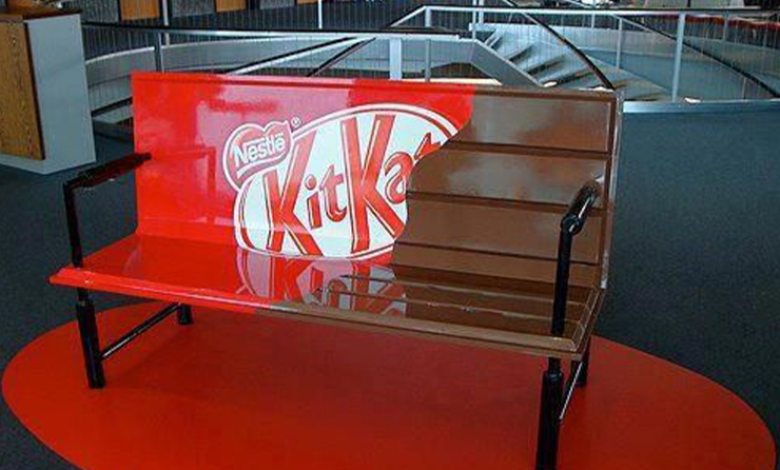
These two concepts are often confused with each other, especially because CGI videos can look similar to guerrilla marketing.
Guerrilla Marketing:
- Takes place in the physical, real world.
- The audience can touch the product and interact directly with the brand.
- The buzz is created by real audiences, without the need for paid distribution.
- The execution cost is usually lower.
CGI Advertising:
- Exists in the digital world and is never physically executed.
- There is no direct interaction between the audience and the brand.
- It usually requires paid distribution to go viral.
- It offers greater creative freedom.
A simple way to put it: Guerrilla marketing is real, while CGI is fabricated — although both aim to surprise you.
Top Examples of Iranian CGI Advertising
Khanoumi and Moisturizing Cream in Zayandeh-Rud
Khanoumi chose the dry bed of the Zayandeh-Rud River to advertise its moisturizing cream. Several giant bottles of moisturizing cream were depicted next to Khaju Bridge, moving across the dry riverbed and “providing hydration.”
This was a smart choice: the Zayandeh-Rud carries emotional significance for Iranians. Combining this emotion with the product’s hydration message created a strong conceptual connection.
Why it worked: The direct connection between the product’s feature (hydration) and the chosen symbol (the dry river). The choice of a location that evokes nostalgia and concern among Iranian audiences.
Khanoumi and the Ball Game on Vali Asr Street
As part of Khanoumi’s birthday campaign, colorful balls were depicted on Vali Asr Street in Tehran. The natural movement of the cars in the video significantly increased its believability.
Key point: Choosing familiar locations (Vali Asr, Khaju Bridge, Rasht Municipality Square) was one of the main reasons behind the success of Khanoumi’s campaigns. When audiences see a familiar place, they become more engaged.
Sheypoor and the Billboard Inside the Tunnel
Sheypoor designed a billboard inside a tunnel in northern Tehran to advertise its villa rental service. The connection between the message (a villa in the north) and the location (a road leading to the north) turned this advertisement into one of the smartest examples of Iranian CGI.
Lesson: When CGI and the advertising message are aligned, the impact can be multiplied.
Kaleh and Mozzarella Cheese on the Highway
Kaleh placed a package of its mozzarella cheese on a billboard, and as cars passed underneath it, the cheese appeared to “stretch” down into the middle of the highway. The video began with real footage of the location and was completed using CGI.
Technical point: Combining real footage with artificial elements can dramatically increase believability.
Successful Global Examples
Adidas — Flying Shoes
In one of its campaigns, Adidas showed a pair of giant shoes being flown through the sky of a city by two helicopters. People watched from below, and their real reactions were recorded. The result was a video that received tens of millions of views within a few days.
L’Oréal — The Citroën 2CV on the Streets of Paris
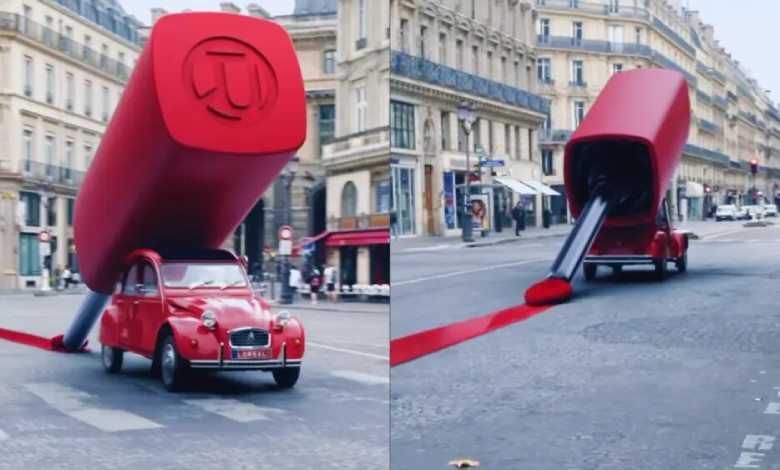
L’Oréal placed its product on the roof of a Citroën 2CV and drove it through the streets of the city. The video was a smart combination of nostalgia (the 2CV) and a new product.
Nike — The Last Game
For the 2014 World Cup, Nike created a fully CGI-animated advertisement in which cloned versions of famous football players competed against one another. This advertisement demonstrated that CGI does not necessarily have to be a “composite video” and can be entirely animated.
Ethical Considerations That Cannot Be Ignored
This is where the issue is often overlooked.
The main question is: Should a business disclose to its audience that the content is CGI?
The reality is that there is no single universal answer; however, there is a professional approach:
Reputable brands around the world commonly use hashtags such as #CGI or #FOOH in their posts. This has three benefits:
- They maintain media ethics.
- They avoid negative feedback from informed audiences who will soon recognize CGI.
- They create a community of CGI enthusiasts who analyze and share the content themselves.
Warning for Iranian brands: Some domestic CGI campaigns have received warnings from advertising regulatory organizations. Maintaining transparency is not only an ethical responsibility but also a legal necessity.
Is CGI Advertising Just a Short-Lived Trend?
No. CGI is not a trend — it is a technique. The difference between the two is important.
Trends come and go. Techniques remain in the industry and evolve.
However, one point should be considered: the more familiar audiences become with CGI, the higher the threshold for creating an impact becomes. A video that was astonishing in 1402 (2023–2024) may seem ordinary in 1405 (2026–2027).
This means execution quality and the originality of the idea will become increasingly important.
The future of CGI is closely tied to artificial intelligence. Tools such as Sora and Runway ML allow brands to produce CGI videos at lower costs and at greater speed. This means smaller brands can enter this space more easily—which is both an opportunity and a sign of increasing competition.
Checklist: Things to Consider Before Deciding to Create CGI
- Is our target audience active on social media?
- Is the advertising message conceptually aligned with the selected environment?
- Do we have enough budget for high-quality production (not just creation)?
- Do we also have a plan for distribution and promotion?
- Do we have enough time before the publication date? (At least 4–6 weeks)
- Are we maintaining the necessary transparency regarding the fabricated nature of the content?
- Is this approach aligned with our brand’s core values?
Frequently Asked Questions (FAQ Schema)
How much does CGI advertising cost?
Depending on the quality, complexity, and production team, the cost of a professional CGI video in Iran can range from several tens of millions to several hundreds of millions of tomans. The main factors include video length, the complexity of the fabricated elements, and the final rendering quality.
What is the difference between CGI advertising and VFX?
CGI means creating an image or element from scratch using software. VFX means combining or modifying existing footage. In most commercial advertisements, both are used together.
Is CGI advertising legal in Iran?
Yes, but transparency must be maintained. Some campaigns that claimed an event was real have received warnings from regulatory authorities.
What is the best platform for publishing CGI?
Instagram is the best option for the Iranian market because of its visual nature and Reels feature. Aparat and YouTube are useful for extending the content’s lifespan.
Can small businesses also use CGI?
With the introduction of AI tools such as Runway ML and Sora, producing CGI content has become easier and more affordable. However, execution quality is still important — poor-quality output can cause damage.
Conclusion
When executed properly, CGI advertising is one of the most powerful tools for viral marketing. Combining creativity, technology, and audience understanding can transform a simple campaign into a media event.
But remember: CGI is a tool, not a strategy. Its success depends on the quality of the idea, precision of execution, alignment with the brand identity, and transparency with the audience.
If you want to design a CGI campaign for your brand or are unsure whether this approach is right for you, the LimooShirin team is ready to recommend the best approach based on your goals and budget.