The Impact of FOMO on SEO
Many SEO professionals believe that titles are only important for search engines; however, in reality, a title is one of the most important factors influencing user behavior.
When FOMO leads to an increase in click-through rate:
- CTR increases.
- User engagement increases.
- Incoming traffic grows.
- The likelihood of improving page rankings increases.
However, FOMO should be used genuinely, as exaggerated titles can increase the bounce rate.
The Most Important Characteristics of Professional FOMO
A successful FOMO title should have several important characteristics:
1. Creating a Sense of Urgency
The user should feel that they have limited time to make a decision.
Examples:
- You only have until tonight.
- Last chance to register.
- Special discount until the end of today.
2. Creating a Sense of Scarcity
The limited availability of an opportunity increases its value.
Examples:
- Only 10 spots left.
- Stock is running out.
- Limited availability.
3. Highlighting the Missed Opportunity
Examples:
- Many businesses have missed this opportunity.
- Read this article before it’s too late.
4. Triggering Curiosity
Examples:
- Most managers make this mistake.
- The secret to increasing sales that your competitors won’t tell you.
Types of FOMO in Marketing
One of the important applications of FOMO in marketing is creating a sense of urgency and fear of missing out on an opportunity among the audience. One of the most common models is time-based titles, which encourage users to make faster decisions by limiting the time available to take action. Phrases such as “You only have until the end of the week” or “Special discount until midnight tonight” are examples of this approach.
Another model is using capacity limitations, meaning showing the scarcity of resources with messages such as “Only 5 spots left” or “Course capacity is almost full” to increase the value and urgency of the offer.
Another type of FOMO focuses on the fear of falling behind competitors or the market trend. In this approach, titles attract the audience’s attention by creating concern about losing a competitive advantage, such as “If you don’t know this technique, you’ll fall behind your competitors.”
FOMO based on popularity is another type. By showing the number of users, buyers, or the level of interest from others, it creates a sense of trust and a desire to join in. Examples such as “More than 10,000 people have purchased this course” or “Don’t miss the best-selling product of the month” fall into this category.
15 FOMO Examples to Increase Click-Through Rate
- Last chance to shop with 50% off
- Today only; a special gift for buyers
- Read this before prices increase
- This mistake could destroy your sales
- Registration capacity is almost full
- Only a few hours remain until the festival ends
- An exceptional opportunity you shouldn’t miss
- If you don’t read this article, you’ll fall behind your competitors
- More than 5,000 people have used this method
- For members only
- This discount will not be repeated
- Last remaining stock in the store
- Only a few spots left
- What is the secret to the success of major brands?
- Learn this technique before it’s too late
Applying FOMO Across Different Marketing Channels
SEO and Content Marketing
Increasing the CTR of search results and attracting more users.
Google Ads
Encouraging users to click on advertisements.
Email Marketing
Increasing email open rates.
Example: “You only have until tonight to use your discount code.”
Social Media
Increasing engagement and driving users to landing pages.
Sales Pages
Helping increase conversion rates and sales.
Common Mistakes When Using FOMO
Creating False Urgency
If you always write “Last chance” but the opportunity never actually ends, users will lose trust.
Overuse
FOMO is most effective when used selectively and strategically.
Unrealistic Promises
The title should be consistent with the content of the page.
Focusing Only on Clicks
The goal is not only to increase CTR; the user experience must also be maintained.
How to Write Effective FOMO
To write a professional title, try this formula:
[Main Benefit] + [Time Limitation or Scarcity] + [Call to Action]
Example:
“Increase Sales with Google Ads; Free Consultation Only Until the End of the Month”
Or:
[Fear of Missing Out] + [Solution]
Example:
“Before You Fall Behind Your Competitors, Implement This SEO Strategy”
What Is the Difference Between FOMO and Clickbait?
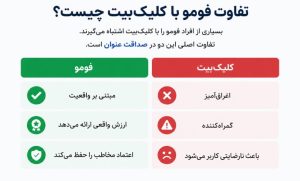
Many people confuse FOMO with clickbait, while the main difference between the two lies in the level of honesty and the actual value of the message.
FOMO is based on a real situation; in other words, the title encourages the audience to take action by creating a sense of urgency or fear of missing out on an opportunity, and ultimately delivers the value that was promised.
In contrast, clickbait typically uses exaggerated or misleading titles simply to attract the user’s attention and generate clicks. Although this approach may deliver results in the short term, it can lead to reduced trust and audience dissatisfaction.